
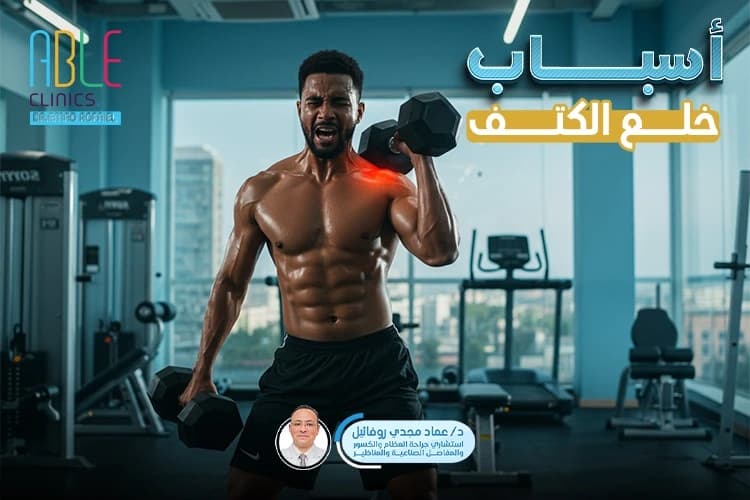
Shoulder dislocation is defined as the separation of the head of the upper arm bone (humerus) from the socket in the shoulder blade (scapula) where it normally rests. Because the shoulder is the most mobile joint in the body, it is also the most prone to dislocation. This injury usually occurs as a result of a strong force acting on the joint.
Understanding the causes that lead to shoulder dislocation can help in taking the necessary preventive measures. These causes fall into main categories, including direct injuries and risk factors that increase the likelihood of dislocation.
Symptoms of Shoulder Dislocation
Before diving into the causes, it’s important to recognize the symptoms that may indicate a dislocation:
-
Sharp, immediate pain in the shoulder.
-
Difficulty or inability to move the arm.
-
Swelling around the joint.
-
Visible deformity in the shape of the shoulder (sloping or dropped).
-
A feeling of numbness or tingling in the arm or fingers.
Direct Causes: Trauma and External Injuries
These are the most common and obvious causes of shoulder dislocation. They occur when a sudden, strong external force impacts the joint:
-
Sports injuries: Sports involving physical contact or repeated forceful shoulder movements are among the leading causes. Dislocation often happens when a player collides with another or falls heavily. Examples include football, basketball, hockey, and combat sports.
-
Falls: Falling directly on the shoulder or on an outstretched arm is a major cause. This can happen at home, while walking, or during bike accidents.
-
Car accidents: Vehicle collisions may force the shoulder strongly forward or backward, pushing it out of place.
Risk Factors that Increase the Likelihood of Dislocation
Some conditions don’t cause dislocation directly but make the shoulder more vulnerable when exposed to even minor force:
-
Weak shoulder muscles: The shoulder joint is surrounded by muscles and ligaments that stabilize it. If these muscles are weak or not properly warmed up before physical activity, they may fail to support the joint, increasing the risk of dislocation.
-
Excessive joint flexibility: Some people are born with looser joints and ligaments, known as “hyperlaxity.” This extra flexibility can make the shoulder less stable and more prone to dislocation, even during normal movements.
-
Recurrent shoulder dislocation: Once dislocation occurs, the joint becomes more likely to dislocate again — a condition known as “recurrent shoulder dislocation.” The ligaments and tissues may become permanently stretched or damaged, reducing their ability to stabilize the joint.
Rare and Uncommon Causes
In some cases, dislocation may occur due to medical or genetic factors:
-
Seizures or electric shocks: Severe, uncontrolled muscle contractions during seizures or electrical injury can cause powerful shoulder muscle contractions, forcing the joint out of place.
-
Genetic factors: In rare cases, the connective tissues and ligaments supporting the joint may be genetically weak, making the individual more susceptible to dislocation.
Types of Shoulder Dislocation
-
Anterior dislocation: The most common, occurs when the humeral head moves forward.
-
Posterior dislocation: Less common, usually after seizures or electrical shocks.
-
Inferior dislocation: Very rare, happens when the arm is forcefully pushed downward.
Risk Factors
-
Young adults (especially men) due to involvement in high-impact sports.
-
Medical history of recurrent shoulder dislocation.
-
Weak muscles or ligaments due to prior injuries.
Possible Complications of Shoulder Dislocation
-
Nerve or blood vessel injury around the shoulder.
-
Ligament or tendon tears.
-
Recurrent dislocation.
-
Shoulder joint arthritis in the future.
Preventing Shoulder Dislocation
-
Regular shoulder strengthening exercises.
-
Using protective gear in contact sports.
-
Learning safe falling techniques in physical activities.
-
Avoiding sudden or extreme arm movements.
Conclusion
Shoulder dislocation is a common but painful injury with multiple causes, ranging from high-impact sports and falls to rare genetic factors. Understanding these causes helps in prevention and reducing the risk of injury. In the event of dislocation, early diagnosis and proper treatment are key to restoring normal shoulder function and preventing complications.