
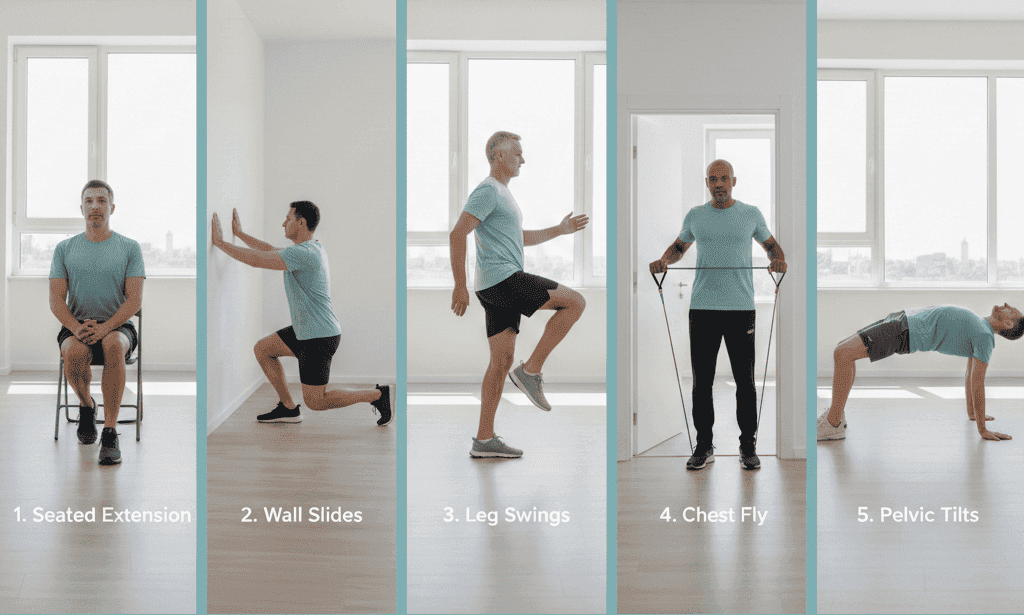
Knee osteoarthritis is a chronic degenerative condition that affects the cartilage and joint surfaces, leading to pain, stiffness, and limited mobility. While medical treatment plays an important role, targeted physical activity remains the cornerstone of effective management. Proper exercise helps strengthen the muscles supporting the knee, reduce mechanical stress on the joint, and improve overall function.
Maintaining regular movement is essential for nourishing cartilage and improving the flexibility of tendons and ligaments around the knee, making exercise a fundamental part of both treatment and prevention plans.
How to Protect Yourself from Knee Osteoarthritis (Prevention Basics)
Prevention focuses on reducing mechanical stress on the knee joint and maintaining joint health over time through several key principles:
Maintaining a healthy weight
Weight control is the most important preventive factor, as excess weight significantly increases pressure on the knee joint.
Regular muscle strengthening
Building strength in the quadriceps, hamstrings, and gluteal muscles provides essential support to the knee and helps absorb shock during movement.
Staying physically active
Avoid prolonged sitting or standing. Regular movement stimulates the production of synovial fluid, which lubricates the joint and reduces stiffness.
Avoiding high-impact activities
Reducing activities that involve repetitive jumping or intense running is recommended. Low-impact alternatives such as swimming or brisk walking are safer options, along with wearing supportive footwear.
First: Focusing on Essential Lifestyle Changes
Before starting any exercise program, it is important to address factors that increase stress on the knee.
Weight loss is the most critical step. Research shows that losing one kilogram of body weight reduces knee joint load by approximately three to four kilograms during walking.
Achieving a healthy body mass index (BMI) plays a vital role in slowing disease progression and is considered a primary goal in conservative treatment.
Second: Recommended Low-Impact Cardiovascular Exercises
The goal of these exercises is to improve cardiovascular fitness and maintain joint mobility without overloading the knee.
1. Swimming and Aquatic Exercises
Swimming is one of the best exercises for individuals with knee osteoarthritis.
Water supports body weight and minimizes the effect of gravity, allowing safe movement and muscle strengthening with minimal joint stress.
Warm water can also help relieve stiffness, while gentle water resistance promotes muscle activation.
It is recommended to begin in shallow water before progressing to free swimming.
2. Stationary Cycling
Stationary cycling allows smooth, controlled knee motion through a full range of movement.
The seat should be adjusted so the knee remains slightly bent at the lowest point of the pedal cycle to avoid overextension.
Start with very low resistance and gradually increase duration before increasing intensity.
This exercise is particularly effective for strengthening the quadriceps, a key muscle for knee support.
Sessions of 20 to 30 minutes at a steady pace are generally recommended.
Third: Targeted Strengthening Exercises for Direct Joint Support
Strengthening the muscles surrounding the knee reduces joint load and acts as a natural shock absorber.
3. Chair Squats
This exercise strengthens the quadriceps and gluteal muscles without excessive knee strain.
Stand in front of a stable chair with feet shoulder-width apart, then slowly sit down and stand back up while keeping the back straight.
Weight should be pushed through the heels, and the knees should not move excessively forward.
Perform 10 to 15 repetitions for two to three sets, depending on tolerance.
4. Straight Leg Raises
This exercise is especially safe in early stages of osteoarthritis because it strengthens the quadriceps without moving the knee joint.
Lie on your back, bend one knee, and keep the other leg straight.
Slowly lift the straight leg to the height of the bent knee while tightening the thigh muscles.
Hold briefly, then lower the leg slowly.
Repeat 10 times for each leg. Light ankle weights may be added once strength improves.
5. Heel Slides
Heel slides help restore joint flexibility and improve range of motion, especially after periods of stiffness.
Lie on your back with both legs extended, then slowly slide one heel toward the buttocks, bending the knee as far as comfortable without sharp pain.
Return the leg slowly to the starting position while keeping the heel in contact with the surface.
Repeat 10 to 15 times for two sets.
Frequently Asked Questions
When should I stop exercising and consult a doctor?
Exercise should be stopped immediately if it causes sharp or sudden pain.
Medical advice is recommended if pain persists for more than two hours after exercise, as this may indicate excessive joint stress.
How can I manage morning stiffness before exercising?
Applying warm compresses for 10 to 15 minutes can help reduce stiffness.
Begin with very gentle range-of-motion exercises before placing weight on the joint.
Conclusion
Combining low-impact aerobic activities such as swimming and cycling with targeted strengthening exercises is the first line of defense in managing knee osteoarthritis.
Consistency, along with weight control, can significantly reduce pain, improve mobility, and delay the need for surgical intervention.
Consulting a healthcare professional or physical therapist is always advised to tailor an exercise program to individual needs.