
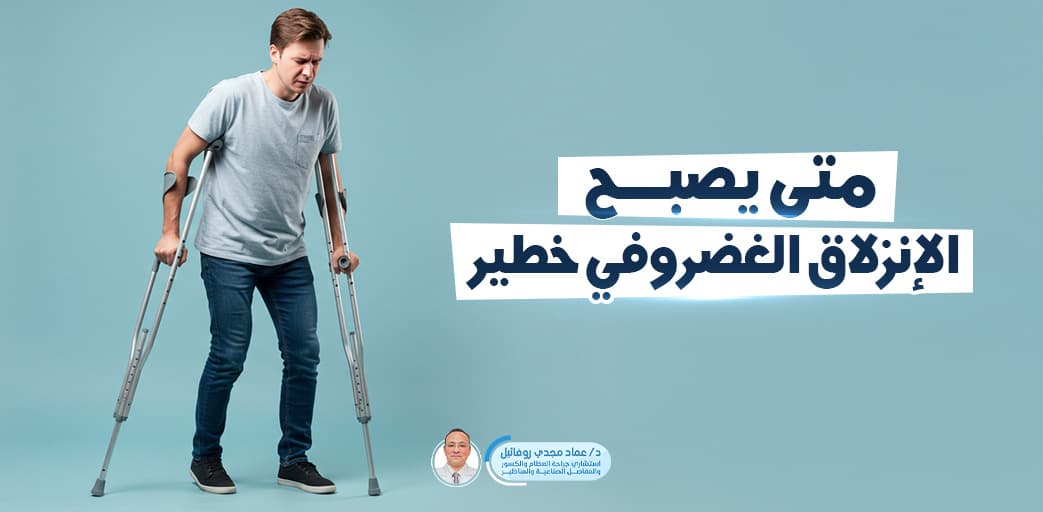
Many people suffer from back pain without realizing whether it's just muscle strain or the beginning of a herniated disc. But the most important question that often occupies patients' minds is: When does a herniated disc become dangerous? And can it progress from simple pain to a condition that requires urgent intervention?
In this article, we’ll explore the warning signs that indicate a herniated disc has become serious and requires immediate medical attention — to avoid complications that could affect the nerves and mobility.
Herniated Disc Symptoms You Shouldn’t Ignore
A herniated disc doesn’t always show up as direct back pain. It can present with a variety of symptoms depending on the location of the affected vertebra and the severity of the herniation.
Here are the most important symptoms that require your attention:
-
Persistent pain in the lower back or neck
Especially if the pain radiates to the leg or arm and worsens with movement or prolonged sitting. -
Numbness or tingling in the limbs
A feeling of pins and needles or numbness in the arm or leg may indicate nerve compression. -
Muscle weakness
If your leg or arm muscles feel weaker or are unable to carry normal weight, this could mean the controlling nerve is damaged. -
Worsening pain when coughing or sneezing
This type of pain suggests internal pressure on the spinal cord or nerves. -
Stiffness or difficulty moving
Especially noticeable in the morning or after sitting for a long time, often with pain when trying to bend or twist. -
Difficulty walking or loss of balance
A worrying sign, particularly if accompanied by other neurological symptoms like numbness or weakness.
When Is a Herniated Disc Considered Dangerous?
A herniated disc is a common spinal condition, and in many cases, it can be treated non-surgically. However, some signs indicate that the condition is no longer mild and may require urgent medical intervention.
Here are the most serious cases:
-
Loss of control over urination or bowel movements
If a patient begins to lose control of bladder or bowel function, it could indicate severe nerve compression in the lower spine — a medical emergency known as cauda equina syndrome. -
Weakness or paralysis in one limb
Sudden weakness in a leg, foot, or arm, or the inability to move it normally, may indicate direct compression of a nerve or the spinal cord. -
Severe pain that doesn’t respond to painkillers
Persistent and unbearable pain, even with medication, may require surgical intervention to relieve nerve pressure. -
Numbness or loss of sensation in the inner thighs or legs
Numbness in these areas is a serious neurological sign that demands immediate medical attention. -
Inability to walk or maintain balance
If a patient struggles to stand or walk normally, it could be due to pressure on the spinal regions responsible for movement and balance.
What Causes Herniated Discs — and Why Do Some Cases Worsen?
-
Improper movement or lifting heavy objects
Lifting the wrong way or twisting the back suddenly can tear the disc. -
Sitting for long periods with poor posture
Especially slouching or without lumbar support. -
Weak back and abdominal muscles
Muscles are the spine’s natural support. When they’re weak, pressure on the vertebrae and discs increases. -
Excess weight
Obesity adds extra load to the spine — especially the lower back — accelerating disc wear and tear. -
Aging
As we age, discs lose flexibility and water content, making them more prone to tearing and herniation. -
Genetic factors
Some people inherit weaker discs or spinal shapes that make them more susceptible to herniation.
Why Do Some Cases Get Worse?
Some patients experience mild symptoms that improve with rest and physical therapy. Others worsen quickly. Reasons for deterioration include:
-
Not following treatment or getting enough rest
-
Continuing bad habits after diagnosis
-
Advanced herniation that wasn’t discovered early
-
Failing to strengthen the muscles around the spine after recovery
Herniated discs aren’t always dangerous — but in some cases, symptoms require it to be treated as a medical emergency.
That’s why it’s essential to know when a herniated disc is serious and to monitor your body carefully for signs like numbness, limb weakness, or persistent pain.
Don’t wait for things to get worse — early diagnosis and proper treatment can prevent a herniated disc from becoming a serious condition that significantly affects your quality of life.