
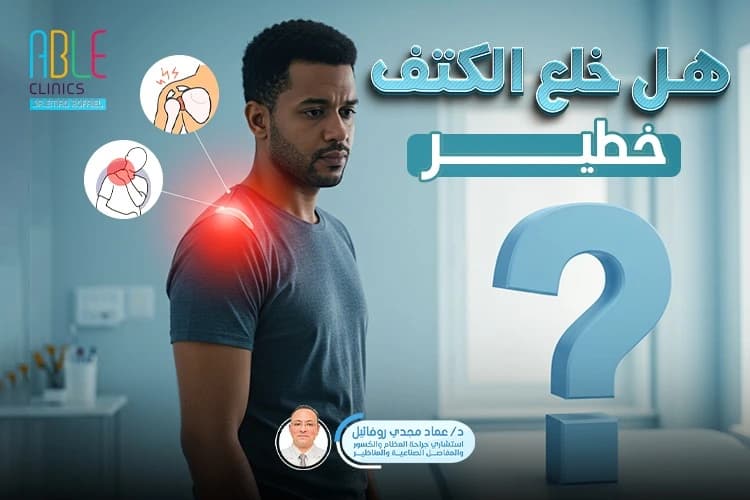
Yes, a shoulder dislocation is considered a serious injury and should not be taken lightly. Although many cases are successfully treated without long-term complications, it carries significant risks if not managed correctly and promptly. Its danger lies in the potential damage to the tissues surrounding the joint, which can lead to chronic problems.
Discover the main causes of shoulder dislocation, including falls, accidents, and sports injuries. Learn about the risk factors that increase the likelihood of this injury with Dr. Emad Raphael.
Why Is Shoulder Dislocation Considered a Serious Injury?
The shoulder joint is the most mobile joint in the human body, which makes it highly vulnerable to injury. When the joint moves out of its socket, the force causing it not only affects the bones but also inflicts considerable damage to the surrounding soft tissues that support and protect the joint.
Key Potential Complications
The greatest risk lies in the complications that may occur if the dislocation is not treated quickly and correctly:
-
Nerve and Blood Vessel Damage:
A number of vital nerves and blood vessels pass close to the shoulder joint. When the joint is displaced, any of these can be stretched, compressed, or even torn.
This damage can lead to severe pain, numbness, or tingling in the arm or hand. In rare cases, it may cause temporary or permanent loss of nerve function. -
Ligament and Tendon Damage:
The shoulder joint is encased in a complex network of ligaments and tendons that provide stability.
The force causing the dislocation often results in tears to these ligaments or tendons. If they are not repaired, this can lead to chronic joint instability, greatly increasing the likelihood of recurrent dislocation. -
Associated Fractures:
In some cases of violent dislocation, the head of the arm bone may hit the edges of the shoulder socket with significant force, leading to a fracture in one of the bones.
These fractures can be minor or severe, and may require surgical intervention in addition to the dislocation treatment itself. -
Recurrent Dislocation and Instability:
If the dislocation is not completely treated, or if the joint is not properly strengthened through physical therapy, the shoulder can become unstable.
This means the joint may pop out of place more easily in the future, even with ordinary movements or minor injuries, significantly impacting the quality of life.
Factors That Increase the Risk of Shoulder Dislocation
-
Recurrence: People who have previously suffered a dislocation are more prone to injuring it again.
-
Contact Sports: Activities such as football, basketball, and wrestling can increase the risk of dislocation due to sudden movements and severe impact.
-
Age: Younger individuals, especially athletes, are often more susceptible to dislocation due to strenuous physical activity.
How to Prevent Shoulder Dislocation
-
Strengthen Shoulder Muscles: Strong muscles around the shoulder help stabilize the joint and reduce the chances of injury.
-
Protection in Contact Sports: Using specialized protectors, such as a shoulder brace, in high-impact sports can help minimize the incidence of dislocation.
-
Correct Sports Techniques: Learning proper falling techniques in contact sports can prevent dislocation.
Treating Shoulder Dislocation: Can Complications Be Avoided?
Fortunately, shoulder dislocation treatment is usually effective in preventing complications, provided it is administered quickly and correctly. The basic treatment steps include:
-
Reduction: The doctor manually moves the bone back into its socket, usually under sedation.
-
Immobilization: Using a sling or brace for the arm for a period ranging from two to four weeks.
-
Physical Therapy: Exercises aimed at strengthening the shoulder muscles and improving range of motion after removing the brace.
-
Surgery: In advanced cases or recurrent dislocations, surgery may be necessary to repair damaged tissues.
In conclusion, shoulder dislocation is not a minor injury. Understanding the associated risks and acting quickly to seek medical assistance are key to ensuring a safe and effective recovery.
Although shoulder dislocation may not necessarily be life-threatening in every case, swift and appropriate treatment is paramount to prevent serious complications like tissue tears or recurrent dislocation.
Anyone suffering from a dislocated shoulder must strictly follow the recommended treatment and consider preventive exercises and physical therapy to ensure full recovery and protect against future injury.
Frequently Asked Questions (FAQ) About Shoulder Dislocation
Can shoulder dislocation cause permanent injury?
In cases where the injury is managed incorrectly or after repeated dislocations, it may lead to permanent complications such as arthritis or nerve problems.
When should I see a doctor?
You should go to the doctor immediately after the injury to avoid worsening the condition, especially if symptoms include severe pain or difficulty moving the arm.
Does shoulder dislocation always require surgery?
No, in many cases, dislocation can be treated without surgery, using physical therapy or immobilization. Surgery is considered an option in the case of recurrent dislocation or if there is severe tearing of the tissues around the joint.