
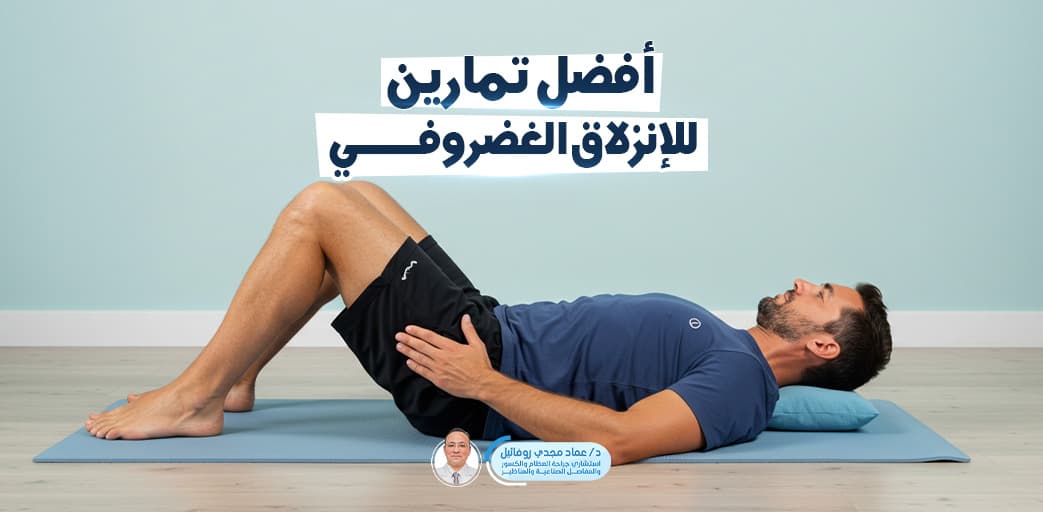
Many individuals with herniated discs suffer from limited mobility and chronic pain, constantly searching for effective non-surgical ways to relieve their symptoms.
In this article, we provide you with a selection of doctor-recommended herniated disc exercises, complete with illustrations to help you perform each move safely and correctly.
These visuals will ensure proper posture and prevent common mistakes — guiding you on the path to recovery, step by step.
How Does a Herniated Disc Affect Movement?
Pain During Movement
Most patients feel sharp pain in the back or neck that worsens when bending, sitting for long periods, or lifting even light objects.
Stiffness and Muscle Weakness
Nerve irritation can lead to spinal stiffness and difficulty with simple motions like turning or bending.
Numbness and Limb Weakness
If the herniated disc compresses the nerves that supply the limbs, the patient may experience numbness, tingling, or reduced strength — which greatly limits movement.
Balance and Walking Issues
In advanced cases, patients may feel unstable while walking or notice an involuntary lean to one side.
Painful, Limited Motion
Even basic tasks like getting out of bed or climbing stairs can become painful, leading to reduced daily activity.
Are Exercises Suitable for All Herniation Grades?
Exercise is one of the most helpful methods to relieve herniated disc symptoms — but not all exercises fit every stage of herniation. Treatment plans and suitable exercises vary depending on nerve pressure severity and the impact on mobility:
Mild Herniation (Grade 1–2)
-
Light exercises may be started after medical evaluation
-
Focus on gentle stretches and strengthening supporting muscles
-
Excellent results with consistency
Moderate Herniation (Grade 3)
-
Exercises are helpful but must be guided by a physiotherapist
-
Some movements are strictly prohibited, especially bending or spinal pressure
-
A back brace may be recommended during exercise
Severe Herniation (Grade 4 and above)
-
Unsafely exercising can worsen the condition
-
In some cases, exercise is prohibited until after surgical assessment
-
Treatment usually begins with medications or surgery before introducing physical activity
-
Important Tip:
Never start any exercise without consulting your doctor or physical therapist — even “light” movements could increase nerve pressure and lead to complications if done incorrectly.
Top 7 Herniated Disc Exercises Recommended by Doctors (with Images)
1. Supine Pelvic Tilt
-
Position: Lie on your back with knees bent and feet flat on the floor
-
Movement: Tighten abdominal muscles and press your lower back toward the floor, then relax
-
Reps: 10 reps × 3 sets
-
Benefit: Strengthens lower abdominal muscles and reduces lumbar spine pressure
2. Knee-to-Chest Stretch
-
Position: Lie on your back
-
Movement: Pull one knee toward your chest with your hands; hold for 10–15 seconds
-
Reps: 3 times per leg
-
Benefit: Relieves lower back muscle tension
3. Cat-Cow Stretch
-
Position: On hands and knees
-
Movement: Arch your back upward (cat), then downward (cow), alternating with breathing
-
Reps: 10 times
-
Benefit: Improves spine mobility and reduces stiffness
4. Cobra Stretch (Prone Press-Up)
-
Position: Lie on your stomach
-
Movement: Press your upper body upward using your hands while keeping the pelvis on the ground
-
Reps: 10 slow repetitions
-
Benefit: Reduces pressure on lumbar discs
5. Bridge Exercise
-
Position: Lie on your back with knees bent
-
Movement: Lift your hips while tightening your abs and glutes
-
Reps: 10–15 times
-
Benefit: Strengthens the back and gluteal muscles
6. Child’s Pose (Side Stretch Version)
-
Position: Sit on your knees and extend your arms forward
-
Movement: Let your torso rest between your thighs while arms stretch forward
-
Hold: 30 seconds × 3 times
-
Benefit: Opens up lumbar vertebrae and relieves pressure
7. Opposite Arm & Leg Raise
-
Position: Lie on your back, lift your right arm and left leg together, then alternate
-
Movement: Alternate sides while tightening the core
-
Reps: 10 per side
-
Benefit: Builds balance and strength in deep spinal stabilizers
Exercises to Avoid with Herniated Discs
Although exercise is key to relieving pressure on spinal nerves, certain movements can worsen the condition, especially if done without proper guidance.
Avoid These Movements:
-
Full forward spinal flexion (toe touches, etc.):
Increases disc pressure, especially in the lumbar spine -
Heavy overhead or shoulder weight lifting (e.g., weighted squats, military press):
Directly compresses spinal discs -
Twisting exercises (e.g., Russian twists or fast trunk rotations):
Can cause uneven disc stress and worsen symptoms -
Jumping or high-impact cardio (e.g., running on hard surfaces, jump rope):
Increases shock on spinal joints -
Deep yoga stretches or extreme backbends without supervision:
May overstretch discs and nerves if performed incorrectly
When to Stop Exercising and Call Your Doctor Immediately
Even though exercises are part of a good recovery plan, continuing without monitoring warning signs can make things worse. Stop immediately and consult your doctor if you notice:
-
Severe or sudden pain during or after the exercise, especially in the back or legs
-
Spreading numbness or tingling in arms or feet — could indicate worsening nerve compression
-
Muscle weakness (e.g., foot drop or weak grip)
-
Loss of balance or unsteady walking — possible neurological involvement
-
Bladder or bowel dysfunction — urgent medical attention needed (possible cauda equina syndrome)
-
Important Note:
Pain is not always normal during exercise. If you experience any of the above symptoms, stop and contact a specialist immediately to prevent serious complications.
Choosing the right exercises is essential for healing herniated discs — but doing them correctly is even more important.
That’s why we’ve provided a curated list of safe, illustrated exercises to be your daily guide — whether at home or during physiotherapy.
Bookmark this page and refer to it whenever needed. The accompanying images are your best tool to ensure every movement strengthens your spine — not strains it.