
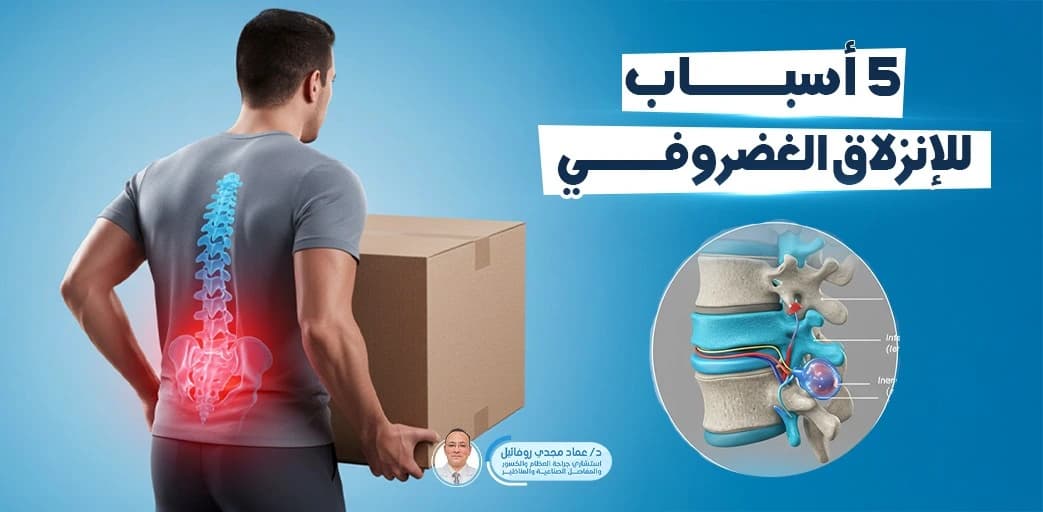
Dr. Emad Roufail emphasizes the importance of understanding the causes of herniated discs to protect the spine from damage and avoid chronic pain.
Ignoring poor posture or lifting heavy objects incorrectly are among the most common causes faced by many patients. He urges people to fully understand these causes, as prevention is far easier than going through treatment later on.
In this article, we’ll cover all the common and rare causes of herniated discs, along with practical tips to protect your back and daily lifestyle.
Common Causes of Herniated Disc
Incorrect heavy lifting
Many people lift heavy objects by bending the back instead of squatting with the knees, which puts direct pressure on the disc, causing its outer wall to tear and the jelly-like center to push out and compress nearby nerves.
Prolonged sitting with poor posture
Office jobs often require long hours of sitting, especially with a forward-slouching back, which puts repetitive stress on spinal discs and makes them more prone to damage.
Aging
As we age, disc hydration decreases, making them drier and more fragile. This reduces their shock-absorbing ability and increases the risk of herniation.
Weak spinal support muscles
When the core and back muscles are weak, the body cannot properly distribute weight. As a result, the spinal disc bears excessive load, increasing the chance of slipping.
Excess weight
Obesity puts extra pressure on the spine, especially the lower back, increasing stress on discs and contributing to herniation.
Sudden or violent movements
Jumping, twisting, or moving suddenly without warming up can cause instant pressure on a disc, leading to a tear and immediate herniation.
Less Common Causes of Herniated Disc
Genetic factors
Some studies suggest that disc structure weakness may be inherited, making certain families more prone to herniated discs.
Severe trauma or accidents
Car crashes or falls from height can cause spinal trauma, leading to sudden disc rupture.
Rheumatic diseases
Chronic conditions like rheumatoid arthritis or ankylosing spondylitis can weaken discs and increase the risk of herniation over time.
Spinal disc infections
Rare cases of bacterial or viral infections can damage the disc, weaken its structure, and result in herniation.
Rare spinal tumors
Some benign or malignant tumors can press on the spine or destabilize it, increasing disc pressure and the risk of herniation.
Common Symptoms of Herniated Disc
Symptoms vary depending on disc location and nerve compression, but the most common include:
-
Back or neck pain – worsens with movement or prolonged sitting
-
Radiating pain – to legs (sciatica) or arms/shoulders depending on disc location
-
Tingling or numbness – due to nerve pressure in legs or arms
-
Muscle weakness – difficulty gripping objects or climbing stairs
-
Movement difficulty – daily activities become harder due to pain or fear of worsening it
Emergency Symptoms That Require Immediate Medical Attention
-
Loss of bladder or bowel control – indicates cauda equina syndrome, a surgical emergency
-
Severe, sudden weakness in legs or arms – may signal serious nerve compression
-
Numbness in the genital area or inner thighs – a red flag for critical nerve involvement
-
Unbearable pain that doesn’t respond to medication – impacts sleep or daily function
If any of these signs appear, seek medical help immediately, as delaying treatment could result in permanent damage or partial paralysis.
Treating the Common Causes of Herniated Discs
Lifting incorrectly
Learn to lift with your knees bent and back straight. Distribute weight evenly or ask for help when needed.
Poor sitting posture
Use an ergonomic chair and take short movement breaks every 30 minutes to reduce disc pressure.
Aging
Engage in simple strengthening exercises and eat foods rich in calcium and vitamin D to support spinal health.
Weak core muscles
Commit to regular exercises that strengthen your core. Consult a physical therapist when needed.
Excess weight
Follow a healthy diet with regular activity to ease spinal pressure.
Sudden movements or twisting
Warm up before any effort and avoid sudden, jerky movements whenever possible.
Treating the Uncommon Causes
Genetic predisposition
Monitor your back health with regular checkups, strengthen your muscles, and protect your spine.
Trauma and accidents
Always use safety gear and seek medical attention after any trauma, even without immediate pain.
Rheumatic diseases
Follow your rheumatologist’s treatment plan and maintain light joint exercises.
Disc infections
Take prescribed antibiotics and rest until the infection and pain subside completely.
Rare spinal tumors
Diagnose early through imaging and follow your oncologist’s or orthopedic surgeon’s treatment protocol.
Your Comprehensive Guide to Herniated Disc
When Is a Herniated Disc Considered Dangerous?
In most cases, herniated discs can be managed conservatively with medications and physical therapy. However, some signs indicate a medical emergency, including:
-
Loss of bladder/bowel control – urgent surgery is required for cauda equina syndrome
-
Sudden and severe limb weakness – may indicate nerve damage
-
Complete numbness in the genital area – highly dangerous neurological sign
-
Uncontrollable pain despite medications – significantly impacts sleep and daily life
In these cases, see your doctor immediately to avoid irreversible complications.
Exercises for Herniated Disc Relief
(Details not listed in original text — assumed continuation from previous sections)
Final Advice from Dr. Emad Roufail
Dr. Emad Roufail stresses that awareness and caution about herniated disc causes can save patients from long periods of pain and treatment.
Avoid poor posture and habits, work on strengthening your back muscles, and stick to healthy daily movement to minimize your risk.
And remember, consulting a spine specialist at the first sign of symptoms is the best step toward prevention and avoiding serious complications.