
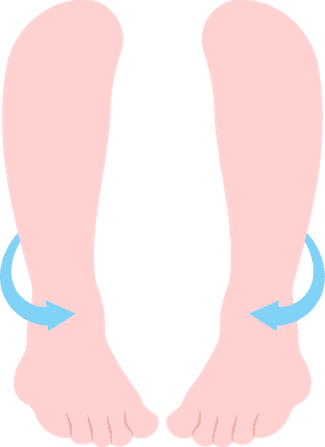
Bowed legs is a physical deformity characterized by the outward curvature of the legs, where the knees remain apart even when the ankles are together.
This curvature can result from conditions like rickets or Blount's disease (tibia vara).
Bowed legs can lead to joint problems such as arthritis in the knees or hips.
Causes of Bowed Legs
Bowed legs can occur due to several factors, including:
- Blount’s disease: This affects children, causing the shin bone to bend below the knees.
- Rickets: Caused by a deficiency of essential vitamins and minerals for bone growth.
- Paget’s disease: It leads to bowed legs and joint problems in adults.
- Dwarfism: Certain forms of dwarfism can result in bowed legs.
- Genetics: Some children are born with bowed legs, which usually straighten as they begin walking.
Types of Bowed Legs
Bowed legs vary in types and degrees, and can be classified into:
- Inward bowed legs: Where the center of the legs comes closer together.
- Adult bowed legs: Often a result of conditions like Paget's disease.
- Bowed legs in infants and children: The severity varies based on age and development.
Symptoms of Bowed Legs
Common symptoms of bowed legs include:
- Widened gap between the knees.
- Abnormal walking pattern.
- Discomfort in joints due to pressure from the curve.
Diagnosing Bowed Legs
To diagnose bowed legs, doctors follow several steps including:
- Physical examination.
- Measuring the legs.
- Observing the walking pattern.
- Conducting X-rays.
Treatment for Bowed Legs
Treatment depends on the underlying cause of the condition and may involve:
- Treating the root cause.
- Wearing special shoes.
- Surgery in some cases.
Complications of Bowed Legs
The condition can lead to complications such as arthritis in the hips and knees, requiring early medical attention.
Bowed legs are not just a cosmetic deformity but a condition that requires proper attention and care. If you experience any of the mentioned symptoms, don't hesitate to consult a specialist to get the correct diagnosis and treatment.
Frequently Asked Questions
How can bowed legs be prevented?
There are no known complete prevention methods, but risks can be minimized by:
- Ensuring children receive adequate Vitamin D.
- Consulting a doctor if bowing persists after the age of two.